A month ago on Sunday, October 26, I returned to my Stanford dorm after an eight hour drive back from Mount Whitney. I had literally just set my pack down in front of my door when my friend ambushed me. I was exhausted but still a little adrenaline-fueled—30 hours ago, I had just summited the tallest mountain in the contiguous United States (14,505 ft)—but I was catapulted back into reality. I spent that entire night debriefing with my friends, who were incredibly worried.
Rewind to Friday. After we wrapped up morning classes, we drove down from Stanford to Whitney Portal Campground, getting there very late. After a quick nap, we started our ascent at 02:00. The first 5 hours of hiking in the dark were a blur; I was waning and waxing in and out of consciousness. The 2.5-hour nap and the 3 hours of sleep I got on both the previous nights, were really coming into effect.
The six of us started with the clear expectation that we would not summit. We knew full well that the weather that day was extreme. Full winter conditions had set in and almost all groups had turned back. But by the time we reached the infamous 99 Switchbacks, summit fever had set in. There was no stopping.
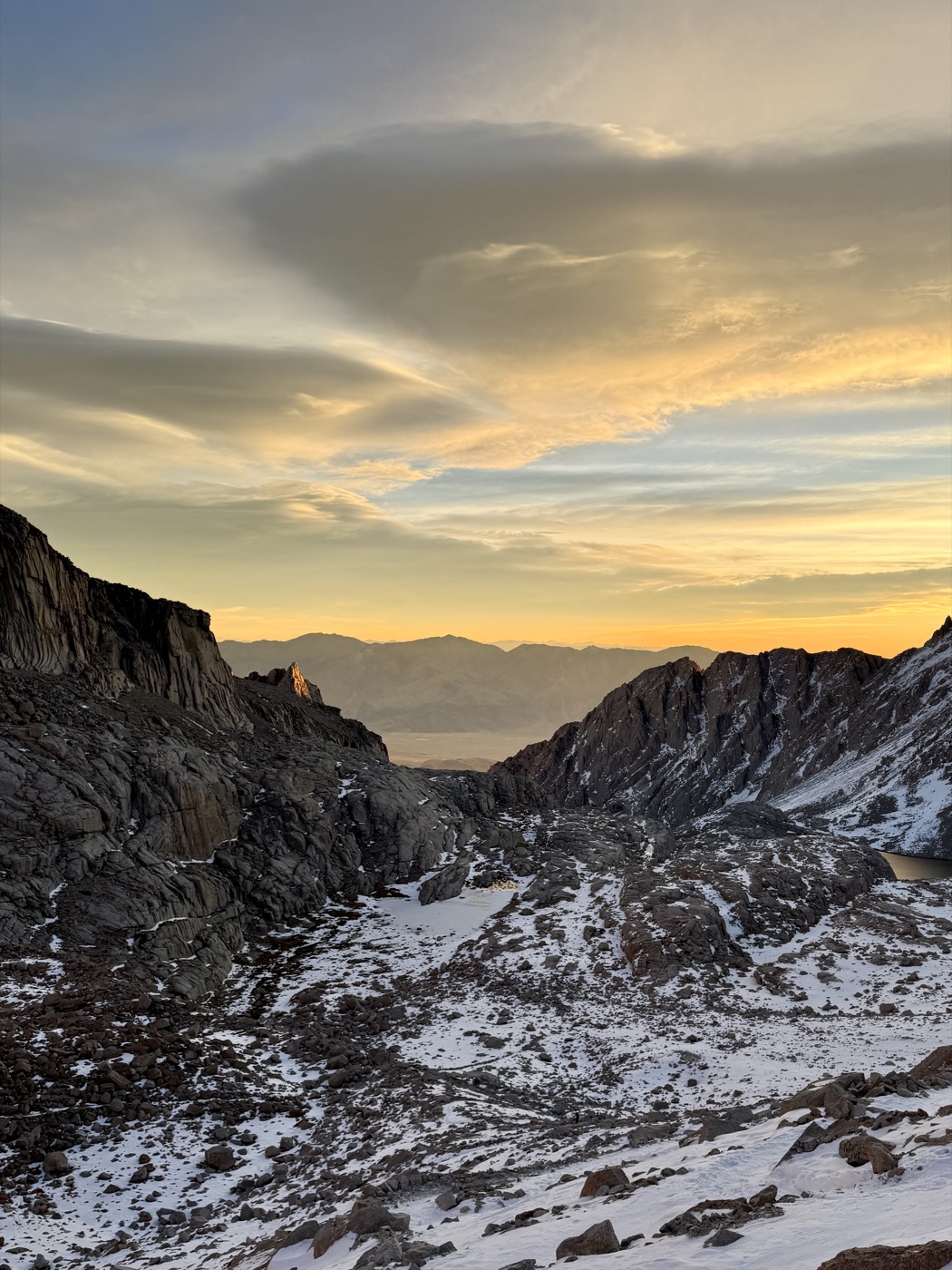
We somehow reached the summit by 11:00. My body was rioting—distraught from the lack of sleep (this, I have come to know, is one of the most painful feelings ever). I kept telling myself, this was type 2 fun! But the thought that this might be type 3 pervaded as well.
The descent is always the most dangerous part. You’re fatigued, depleted of adrenaline, and maybe a bit complacent. The worst part hadn’t even begun. Our descent was marked by trudging through dangerously loose snow or trying to fight violent winds on the ridgeline.
We made it maybe halfway down the 99 Switchbacks when one of my friends suddenly slipped. The winds had contoured two powdery switchbacks, leading to a straight drop. He kept falling. I closed my eyes out of fear. When I opened my eyes again, I saw that he had miraculously stopped before a cliff. Whatever remaining adrenaline I had in me surely kicked in, because the next thing I knew, I started slipping as well. I felt utterly terrified.
All 6 of us ended up being okay. We were incredibly lucky. But as we slowly rounded the switchback, relief transformed into solemnity. We found a climber who had not been so lucky. We split up our group, with some staying behind to call SAR.
We didn’t reach basecamp until 22:00 and by that point, I was at war with my body to stay awake, taking 30-second micro naps every time we stopped to drink water. I passed out the moment we got back to our tent, only to be jolted awake by the urge to vomit—for the first time in my 20 years of life.
Now, a month later, I still don’t know if I would characterize Mount Whitney as type 2 or type 3 fun. This 20-hour monster of a “day hike” was the most psychologically challenging experience I’ve had recreating in the outdoors.
After all that, why am I still drawn to mountains?
In the quotidian, I find my identity suspended in a superposition of distractions, obligations, and ambitions. After a while, the stakes and consequences soften. On a mountain, the world becomes oddly simple. There is a unique compression in which every part of you collapses into the present moment.
I reflect on all this as I spontaneously bought a flight to Ecuador. In two weeks, I’ll be attempting to summit the Triple Crown: Cayambe (5,790 m), Cotopaxi (5,897 m), and Chimborazo (6,263 m).